The Asian Civilizations Museum was on my original itinerary as a maybe, mostly due to timing. As it turns out, I ended up right at the museum just before opening, so I putzed around for a few minutes waiting for the doors to be unlocked.
The museum is housed in the Empress Place Building, originally known only as Government Offices. It was built in phases from 1864 to 1920.
The first exhibit one sees is on the Singapore River, which runs right outside the front doors.
This gallery has lots of artifacts relating to Singapore, especially the downtown business district and the building's history.
These historical trinkets are the kinds of things I like to see in museums. I love beautiful artwork and royal gowns as much as the next person, but folk history is much more interesting.
In addition to the relics are some displays showing life back in "the day".
The musical instruments were pretty fun to see, too.
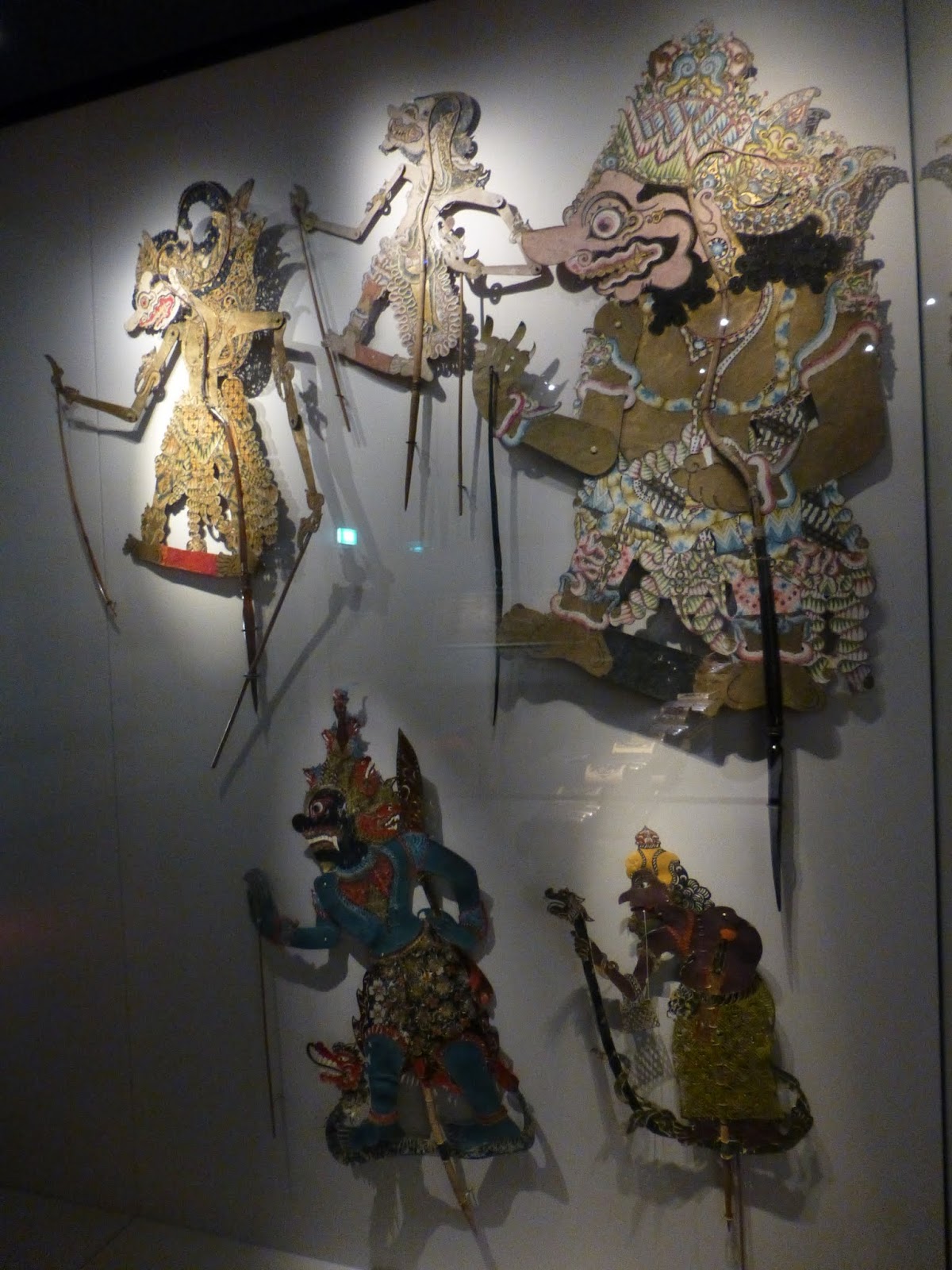
From there, the museum moves into older relics.
This is where the beautiful royal jewelry and furnishings can be found.
To go with the gorgeous bodywear, we have... royal gowns!
Singapore is a nation of many cultures, and the museum looks at several of them.
There is some impressive porcelain work, from the plate on the left to the incense burner on the right.
I don't think I'd want the pig's head or pink porcelain containers on my dining table, though they're both beautiful in their own way.
The museum tries to be as "hands-on" as possible, with various exhibits allowing some interactivity. And the museum has a good balance of folk history to go with the usual royal history.
The South Indian gallery has some very colorful pieces which reminded me of a Hindu temple I visited the day before. I'll post about that at some point.
After walking through all of the exhibits, I can definitely see why, in 2014, this was ranked the top museum in Singapore and the ninth best museum in Asia according to TripAdvisor.
There is also a children's area (closed when I visited) and a restaurant in addition to the usual gift shop.
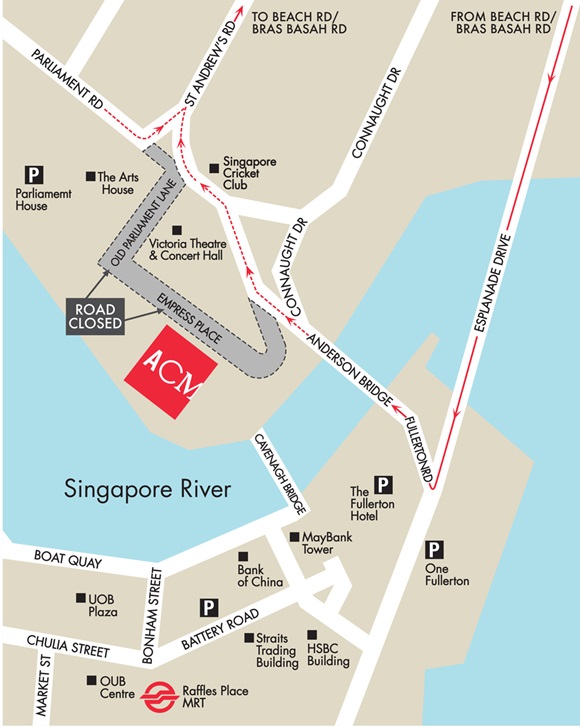
The museum opens at 10 AM daily, closing at 9 PM on Fridays and 7 PM the rest of the week. It's located downtown about five minutes on foot from the Raffles Place MRT station. Admission is $8; it used to be free for for everyone, but starting in late November, tourists began to be charged admission.
Showing posts with label art. Show all posts
Hong Kong Heritage Museum
Located in a nice building way out in the middle of nowhere, the Hong Kong Heritage Museum looks like it has a lot to offer.
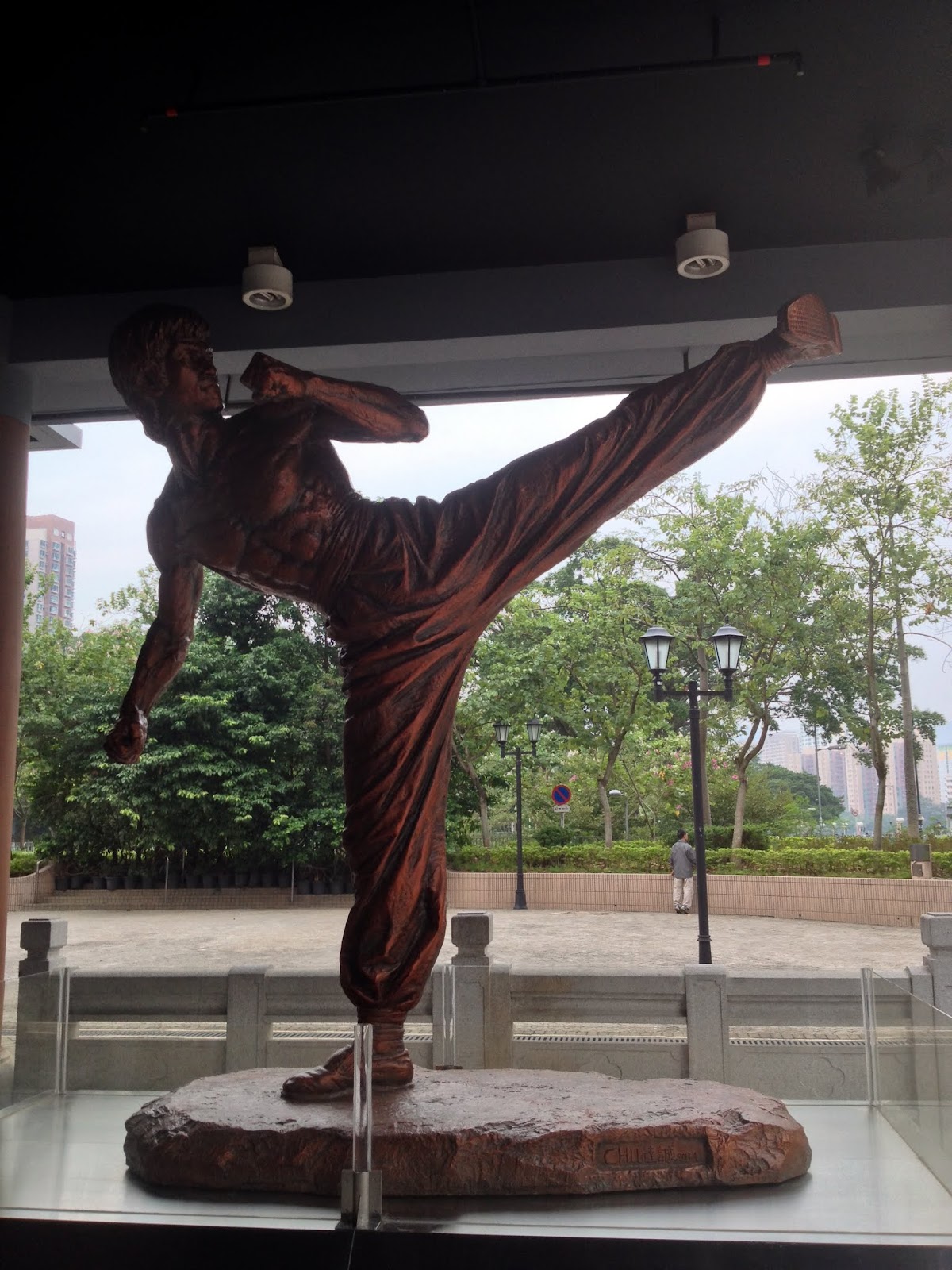
Out front is a nice statue of Bruce Lee, though given the timing of my visit it could have been temporary.
Inside, the lobby is quite spacious. The museum is spaced across two floors, but the exhibits are all on the second floor. The gold-yellow area is part of a special exhibition on Bruce Lee. To the right, a gallery provided a very well-made and comprehensive history of Bruce Lee's life, acting career, and martial arts studies. The yellow area is filled with a collection of Bruce Lee memorabilia from a collector - trading cards, toys, movie posters, and so on.
The left-hand side holds the permanent exhibitions.Again I noticed the large spaces, but I felt like I was in and out quickly due to a lack of depth.
That isn't to say that the museum is a waste of time. I just felt it was a little unrepresentative of what I would find inside. The chest holding old tobacco boxes and tins near one of the gallery entrances was the highlight of the permanent collection for me, because I love old advertising art. See below.
The first floor has a restaurant, gift shop, and kids area. Being a bit out of the way, I wouldn't make a visit to this museum unless it has a special exhibition you're interested in seeing. It seems that the Bruce Lee exhibit is still there a year and a half after I visited, so it may be a permanent exhibit (right now the museum lists it as current through July 2018). If that is the case, and you're a Bruce Lee fan, this museum is definitely worth the trip.
The museum is open 10:00-18:00 (til 19:00 on Saturday and Sunday), closed on Tuesdays. It's located across the river (use the pedestrian footbridge) from Che Kung Temple Station, Exit A.
Admission is HK$10, free on Wednesdays. There is a museum pass including several other museums for $100 for one year, $50 for six months, and $30 for a week. If you can't visit during a free time, the pass may be a good option. The six month and one year passes also offer discounts, including a substantial discount at Hong Kong Disneyland.
Out front is a nice statue of Bruce Lee, though given the timing of my visit it could have been temporary.
Inside, the lobby is quite spacious. The museum is spaced across two floors, but the exhibits are all on the second floor. The gold-yellow area is part of a special exhibition on Bruce Lee. To the right, a gallery provided a very well-made and comprehensive history of Bruce Lee's life, acting career, and martial arts studies. The yellow area is filled with a collection of Bruce Lee memorabilia from a collector - trading cards, toys, movie posters, and so on.
The left-hand side holds the permanent exhibitions.Again I noticed the large spaces, but I felt like I was in and out quickly due to a lack of depth.
That isn't to say that the museum is a waste of time. I just felt it was a little unrepresentative of what I would find inside. The chest holding old tobacco boxes and tins near one of the gallery entrances was the highlight of the permanent collection for me, because I love old advertising art. See below.
The first floor has a restaurant, gift shop, and kids area. Being a bit out of the way, I wouldn't make a visit to this museum unless it has a special exhibition you're interested in seeing. It seems that the Bruce Lee exhibit is still there a year and a half after I visited, so it may be a permanent exhibit (right now the museum lists it as current through July 2018). If that is the case, and you're a Bruce Lee fan, this museum is definitely worth the trip.
The museum is open 10:00-18:00 (til 19:00 on Saturday and Sunday), closed on Tuesdays. It's located across the river (use the pedestrian footbridge) from Che Kung Temple Station, Exit A.
Admission is HK$10, free on Wednesdays. There is a museum pass including several other museums for $100 for one year, $50 for six months, and $30 for a week. If you can't visit during a free time, the pass may be a good option. The six month and one year passes also offer discounts, including a substantial discount at Hong Kong Disneyland.
Hong Kong: Ten Thousand Buddhas Monastery
Going off the beaten track isn't really that hard in Hong Kong. Actually, that's true for pretty much every city and country in existence. But what I mean here is that public transportation is so good that it's really not so hard to get anywhere in Hong Kong. So while most people don't head out to see the Ten Thousand Buddhas Monastery, it's easy to get to and worth the time.
Speaking of getting there, I had a bit of difficulty following Google Maps, mainly because the road mapping here (and actual roads themselves) is a bit sketchy. Sha Tin Station is the closest MTR station. At the gates, turn left, and head back to the pedestrian ramp seen above.This old building can be seen from that ramp; head down the ramp toward the square.
When I visited in 2014, the square was under construction, but that didn't affect pedestrian traffic much.
Head back towards the cluster of buildings with storefronts. you're going to head to the corner.
In the corner of this shopping area, there is a flower shop and a restaurant (those could change by the time you visit, but the buildings will probably remain). Head back in there to the path between the buildings.
Here is the path you want. Note the "stone" building on the left.
That path is mildly twisty; keep heading back. Note the pagoda way off in the distance. That isn't the monastery but can help guide you for a while.
Note the sign here leading the way. Follow the arrow to the left.
The path will continue for a little while. Just keep going. I believe there were tennis courts or something like that behind the dark green fence.
Eventually you'll reach some modern buildings. Again, keep going straight down that road. (Note: if you turn left here you'll end up at Po Fook Ancestral Hall with its own pagoda; admission there is supposedly free to and I've heard it's nice.)
The modern building is the Sha Tin Government Office. Head past its main entrance and keep going back.
And you'll eventually see this sign. That path will lead you to enlightenment. Or at least ten thousand Buddhas.
This isn't where the 10,000 Buddhas are. But your trip up the hill will take you past over 500 large Buddha statues, all in different poses. Note the white and red signs here. You should also see at least one sign warning against giving money to beggars who prey on the tourists. Note that the monastery is free and that the beggars are not part of the monastery; they might not even be Buddhists and beggars are not considered true believers. Save your donation money for the top and give it directly to the collection boxes.
Be sure to enjoy the Buddhas on your way up. If I'd had enough time I would have probably photographed each one to admire later. As it was, I probably shot about 50 pictures.
It's not an easy walk, especially if you're out of shape!
While the monastery is quite nice, as you'll soon see, I think I enjoyed the hike up more than the top.
Ahh! Stairs! My mortal enemy! These steps do mark the final battle in your march to the top.
The statues up here are a little bit different, too. If you pay enough attention, you'll notice the differences in statue detail and quality as you compare older and younger statues.
Finally, the top. This is the main building, inside which is the 10,000+ Buddha statuettes.
There are a few other structures, including a nine-story pagoda you can climb.
More interesting statues await you at the top.
This is Kwun Yam Pavilion.
Various statues and a collection box. I encourage you to donate to support the upkeep of all the fantastic statues.
The monastery was built fairly recently (finished in the 1950s) and the Buddhas were finished in the '60s. However, flooding and landslides damaged the area in 1997 and I believe it's now finally repaired.
The pagoda and the statues in the pavilion.
Looking out from the pagoda.
Behind the pagoda is another pavilion.
The main building, which houses around 13,000 mini Buddhas.
There are a couple large Buddhas inside.
Each of the 13,000 little guys are unique.
A staircase leads down to a small area. There are more statues here.
There are other things to be found further into the complex, but unfortunately my time was too short to fully explore. This is one of those places that I'd really like to visit again - both to see what I didn't have time for and to spend more time enjoying that which I've already experienced.
The monastery is open 9:00-5:30 every day, and admission is free. Plan to spend a good bit of time here, both for the journey up and down the hill and to take time to explore the grounds. And extra time for the Po Fook Ancestral Halls.
Subscribe to:
Posts (Atom)