Hong Kong: Kowloon

Hong Kong Island, full of towering skyscrapers, is what people envision when you mention this city's name. That's where the money is, and that's where the British people lived. But those in the know are also familiar with Kowloon, the "Chinese" city across the water. This is where the airport was for so long. This is where the infamous Walled City once existed, with its almost mythical population density. And this is where progress has come slowly, if at all.
 Kowloon is also where the flavor and culture is. For gentrified suburbanites, it's a scary, dirty place. But for the adventurous, there's something awesome hiding around every corner and down every alley. But you don't have to hunt for history. Right next to the Star Ferry terminal is the old clock tower. This is where the old Hong Kong railway station was, and while the historic building itself was torn down, the tower remains as a landmark. Nearby are several museums.
 I avoided public transportation as much as possible, not because of fear or disgust, but because Kowloon's streets are lined with interesting shops and factories.
 Just peaking inside buildings as I went from destination to destination meant that sightseeing didn't have to wait til "are we there yet" - this is some metalworking/pipe shop.
 And another shop was full of mannequins waiting to move to other shops.
 The buildings here are high, but old and run down. Air conditioners poke out of windows, laundry hangs off poles, and everything feels gritty and dirty. Greenery is almost nonexistent if you're not in a public park.
 But three doors down is a bakery with really beautiful cakes on display. Or a window selling delicious snacks. Or a shop full of toys or suitcases or clothes for old ladies.
Some areas of Kowloon are better for exploring than others. And with only a few days, I wasn't able to visit them all. But there is more to come here - streetscapes, markets, and more.

Hong Kong: Kowloon Park

Kowloon Park was developed in the 1970s on the site of old barracks, and now is quite a large park near the downtown area of Kowloon. My stop here was brief, but I got to see the most important parts of the park.
 I really had no idea what to expect, and stopping at the park happened only because I had a little extra time when I was passing by. On the east side of the park is a nice traditional walled garden, with a lot of these trees lining the outside.
 Inside, you'll find interesting rocks and a pleasant pavilion over a small pond. An old, tree filled park, this is a shady, quiet place to relax and unwind.
 The inside wall of the garden is quite nice as well. Directly to the left of this photo were a group of people doing what I think was tai chi.
 Across the park on the west side is the old barracks. I'm not sure I found the actual barracks, but I did discover some nice paths. Sorry, but I didn't have enough camera battery to take tons of pictures at this point in the day. (I would soon make sure that didn't happen again; I bought a spare battery for my camera as soon as I returned to Japan.)
 In the area is this castle tower to climb, though it doesn't exactly have a view of anything.
The park also has a museum, a large swimming pool, a sports center, and something called the Avenue of Comic Stars, a sort of walk of fame. As I mentioned, I didn't have a lot of time to spend here, but I'm sure there are plenty of other hidden treats to find nestled along the side paths.

Kowloon Park is located just north of Tsim Sha Tsui MTR station, and a short walk from the ferry and several other Kowloon sightseeing spots.

A Few Images from Hong Kong's 2014 Protests

Those of you looking for violence, marches, and rallies have come to the wrong place. My visit occurred when things were mostly quiet. Instead, I saw lots of tents and people hanging around.
 I didn't plan it, but I ended up walking through Kowloon's site in Mong Kok. They took over the main arterial through there.
 A wall full of protest propaganda.
 There were lots of tents. I'm not sure what was going on other than people hanging out, actually, but I wasn't there to explore and find out.
 These Minions trash cans used as a blockade were pretty cool though.
If you're interested in reading about the protests, check out the Wikipedia article.

Hong Kong Museum of History

 This may look like the entrance to the Museum of History, but it isn't. For that, you need to go to the right and go up the stairs below:
 After finding the entrance, I entered a pretty comprehensive museum.
 Admittedly, it doesn't stand out with anything truly unique, but visitors will certainly have a thorough understanding of Hong Kong's past.
 History here starts with prehistory. Hong Kong was home to tigers!
 Apparently, prehistoric men were all light brown including their hair color and clothing. I guess they blended in with the sandy beaches.
 A nice collection of old pottery.
 Traditional clothing.
 This was pretty cool - an old junk boat.
 You couldn't go inside, but you could go onboard and see what it looked like inside.
 Fish laid out to dry.
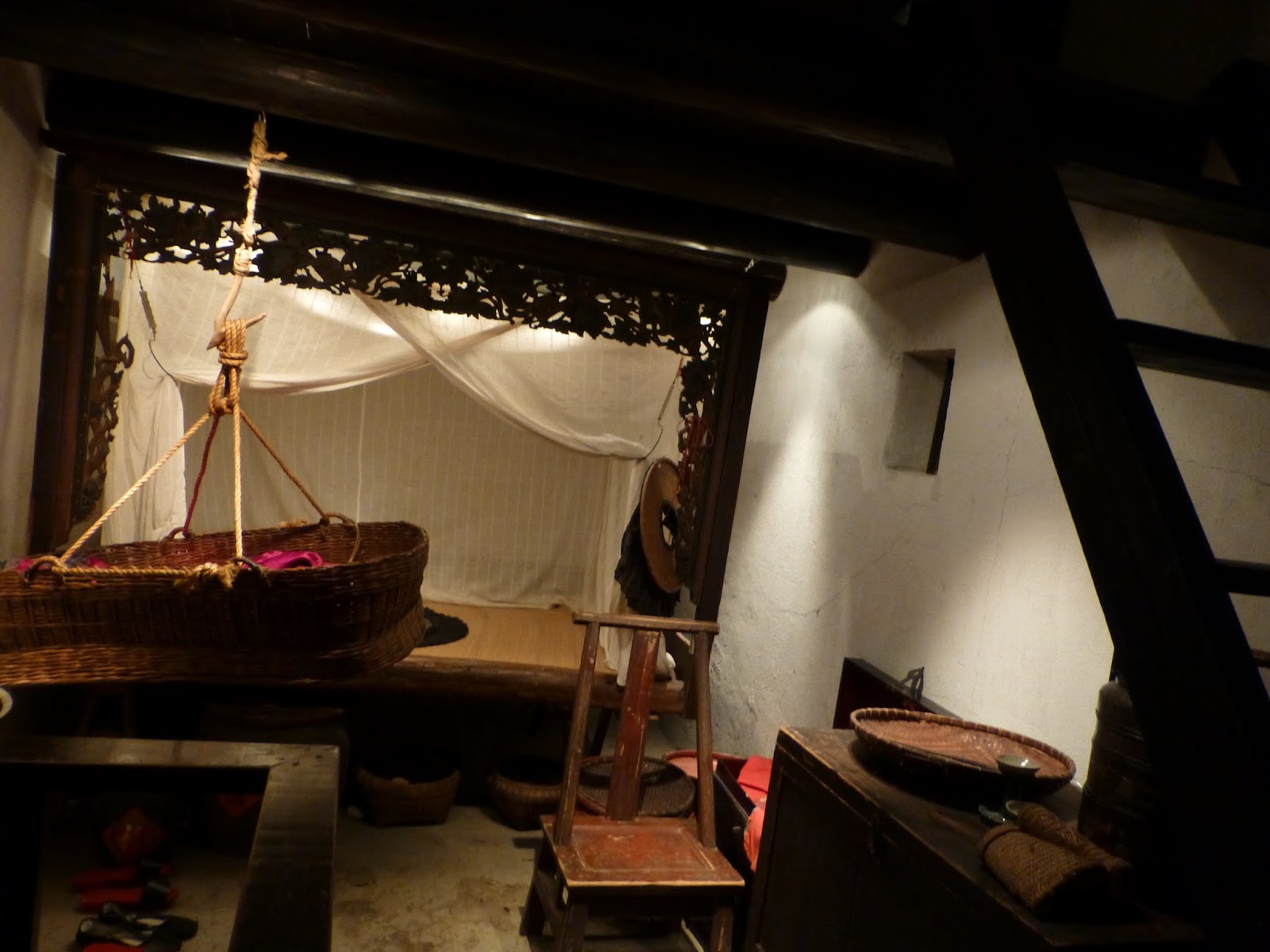
 There are several recreated "buildings" inside the museum, so you could look and possibly reenact life in the past.
 It's time to sit down to dinner!

 In the "old city" you could see additional historic artifacts.
 A large area was arranged to display the Seven Sisters Festival, a ritual which has apparently disappeared from modern Hong Kong.


 Lots to see in this museum, especially explaining lots of traditional culture.
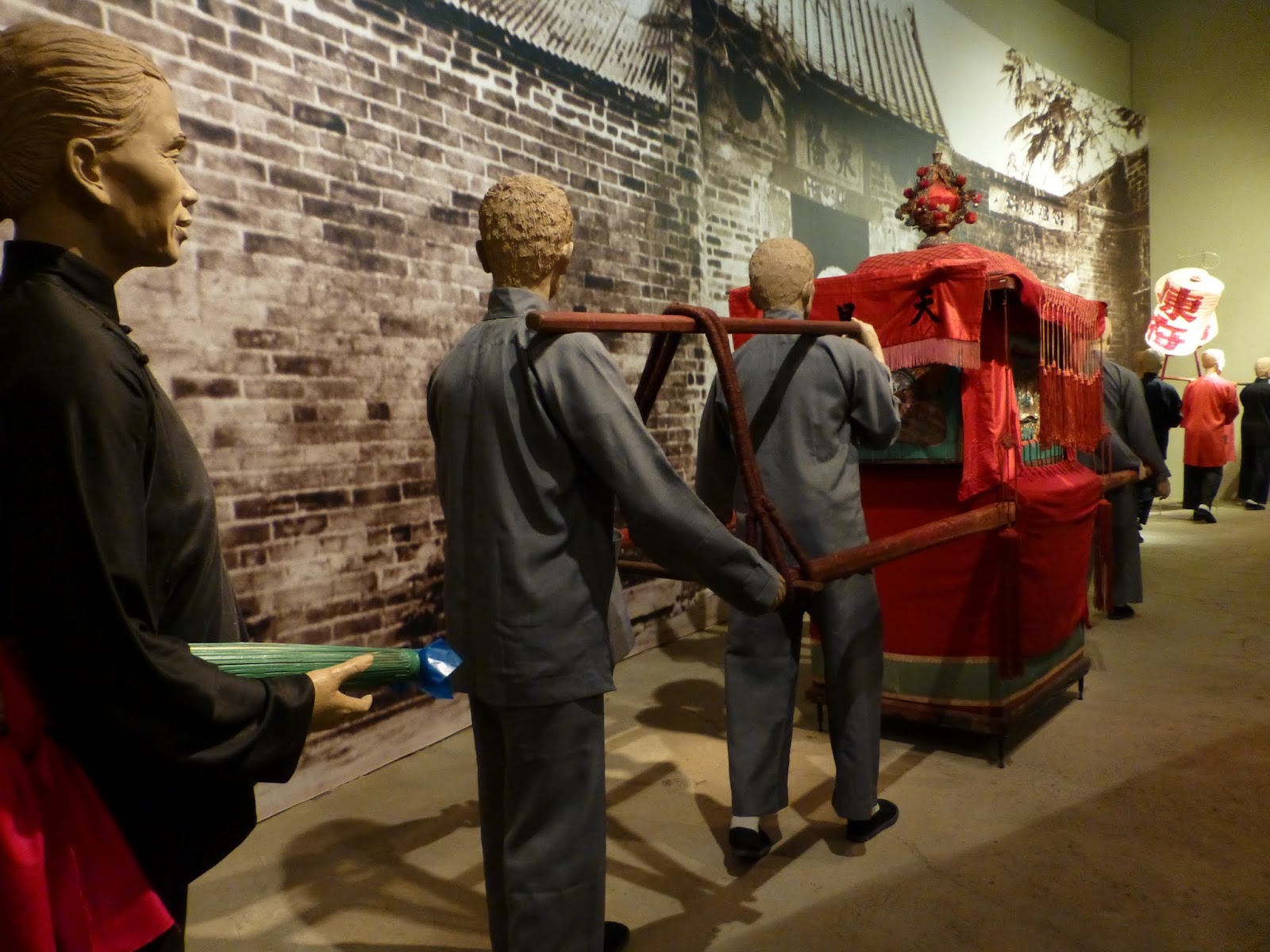
 Another large area had a procession set up for a parade.

 Further into the museum, early 20th century buildings were set up.
 There was a post office, a store, a restaurant, and more.

 While the authentic sounds and smells were missing, it really looked like the Hong Kong of early movies.
 You could even board an old double-decker tram, though you couldn't go upstairs.

 These little book things looked pretty cool. I didn't see anything that explained what they were, though.
 Hong Kong is certainly well-known as a shipping and manufacturing hub, and a lot of Hong Kong-made goods are displayed at the end of the museum.
While manufacturing has shifted to even cheaper labor locations, this city has a legacy of producing some of America's classic toys and other merchandise.

Admission is only HK$10 (that's really cheap with the exchange rate!) and the museum is open 10:00-18:00, 10:00-19:00 on Saturdays, Sundays, and holidays; closed Tuesdays and a couple major holidays).
The museum is accessed in a few different ways. The easiest and closest MTR station is probably Hung Hom, using exit D1. East Tsim Sha Tsui (P2) and Tsim Sha Tsui stations (B2) are also nearby. Kowloon isn't too spread out so walking isn't out of the question. The museum's website is here and has some maps to help you get an idea of the museum's location and where the entrance is on the building.