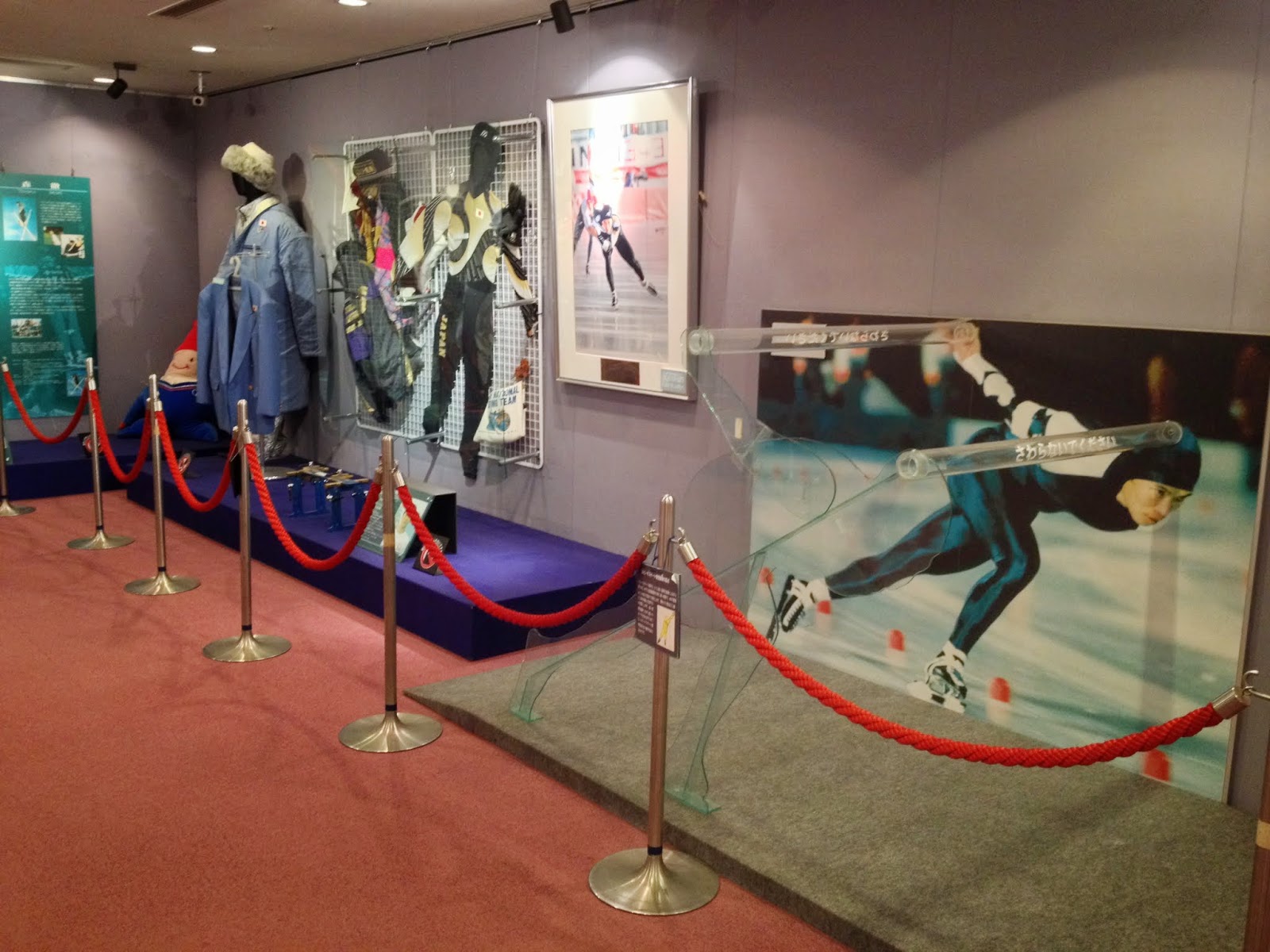
My last stop in Nagano was a little ways outside of town, in the surrounding hills. Jigokudani is well-known in Japan, and probably the driving factor in my decision to go to Nagano. The Olympic Museum I posted about yesterday is probably a close second. After taking a direct bus from Nagano Station, you get off in front of a museum.
Jigokudani literally translates as Hell Valley, and is a common name used for valleys with hot springs - usually ones with active volcanos, sulfurous streams and steam vents. The most famous one is in Hokkaido, but Nagano's is easier to get to and possibly better. While I say Nagano, this Jigokudani is in Nagano Prefecture, but actually in Yamanouchi city. The area's also known for hot spring resorts and ski resorts.
Getting off at the Kanyabashi Onsen stop, the first thing you see is a folklore museum. I arrived late enough in the afternoon that I didn't have time to visit it. From there, you should probably have a map; there is one Japanese map near this museum, which will help you get to the trailhead. Essentially, you follow one road, make a right at the dead-end, and follow that up the hill to the start of the trail.
The road ends, and the trail begins. It looks tough at first, and you will walk up hill a little bit. But most of the trail is relatively flat and easily walked.
As you can see, there's a wide gravel path with plenty of trees. It can be a little bit muddy after a rain and I recommend good shoes even in the summer just to be safe.
You have some nice views as you follow the trail 1.6 km to a Japanese inn, and then the monkey park.
I visited in late November, and many of the trees were showing their colors. In the winter, this is covered with snow! Yes, you can visit in the winter, and the monkeys are much more likely to be in the water when there's snow on the ground. One of the first good snowfalls had occurred a few days before my visit, though almost all of it was gone.
Once you reach the park itself, you pay your admission and start to see monkeys. There are signs along the path warning you about having food, and I've heard first-hand accounts of monkeys going into bags, backpacks, and more because they can smell your stash. There are pay lockers at the entrance to the park if you absolutely must bring food to the park, and I don't recommend having any with you once you enter.
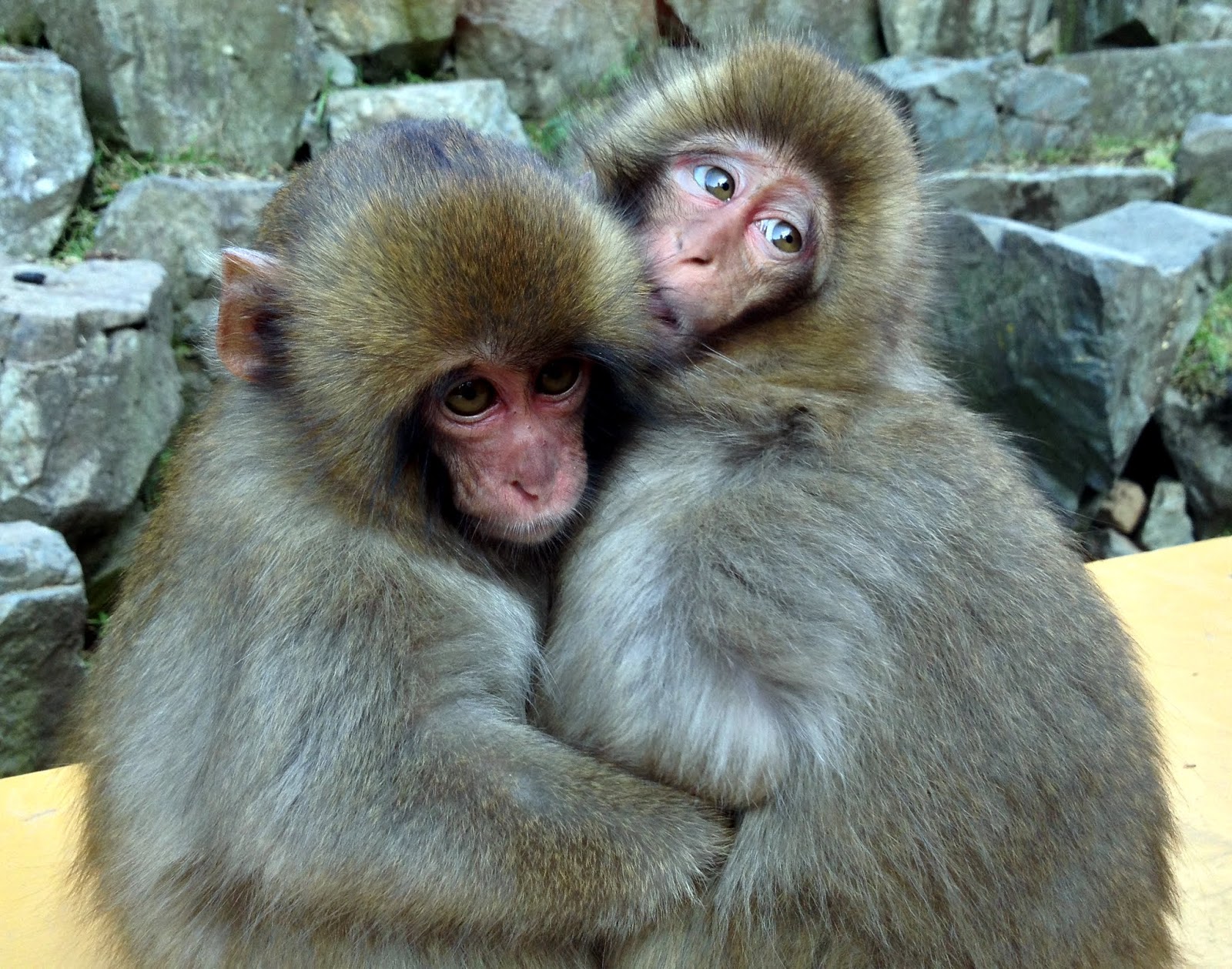
It is possible to see monkeys along the trail to the park, and all of the Japanese macaques are wild. But they are comfortable around humans. Little ones are fun to watch as they play with each other.
This man has food, and the macaques know it. He works at the monkey park, and if there aren't enough monkeys in the water or nearby, he'll throw some food, which looks similar to dry dog food, down onto the ground or into the water. Then, all the animals come running.
These two little ones were sitting on a cabinet of some kind. They were quite interested in the tourists, and one of them was really curious about my iPhone. He came right up to me and touched my phone (which I was using as a camera), and even held my finger for several seconds. Unfortunately I wasn't able to get any pictures of it. That event alone made the entire trip worthwhile.
The main draw for the monkeys is the hot spring pool. The pool is probably artificial but it's naturally fed.
It was cold enough that monkeys stayed in the area and jumped in the water sometimes.
Hmm, I'm a macaque. What should I do?
Oh, something over there looks interesting...
Yup. It is what you think it is.
Is that how I was made, Mommy?
Most tourists will stand around the pool on the upper area, with the mountainside behind them. Monkeys tend to be in the water or among the mountain's rocks. You can walk around some of the pool and by the stream by climbing around a bit. I found that was a better vantage point for low-angle shots, and being right along the pool's ledge meant that monkeys were frequently walking right next to me.
Unfortunately I wasn't able to charge my camera for the day due to having the wrong cable, so I was snapping photos as quickly as possible with both my camera and iPhone before both batteries died. I got some great shots, but even more importantly a wild baby monkey held my hand.
Anyone heading to the Nagano area should take the hike out to Jigokudani Monkey Park and experience this first-hand. Information is mostly in Japanese, but you'll be fine without it. The park is open 8:30-17:00 April through October, and 9:00-16:00 November through March. Admission is 500 yen, and the park is open every day, except due to weather conditions.
Coming from Nagano Station, visitors can catch a fairly direct bus. Ask at the visitor's center for information on which bus to take and to get an updated schedule. As I mentioned earlier, get off at the Kanbayashi Onsen stop and walk to the start of the trail, following the trail to the park. The hike itself takes about 30-40 minutes depending on how quickly you walk, if you stop for photos or a rest, etc.
Bring water for the hike; there is nothing out there and I don't remember seeing vending machines anywhere.
The best time to visit is probably in the winter, when the snow is on the ground and the monkeys are highly likely to be in the water keeping warm. Apparently the monkeys are a bit erratic in the fall, but you get great fall colors in the hills and I saw plenty of monkeys at and in the hot spring. I saw the monkeys fighting a bit as they are always trying to move up the hierarchy, but nothing serious - a friend who visited about a year prior said that they were quite violent. Spring and summer will be the most comfortable for hikers, but the monkeys are less likely to get wet when they're already warm. The trail from the bus stop is passable year-round, but it will be snowy and cold if, well, it's snowy and cold outside.